
“I think there’s a pretty big problem with the RV. The horizontal stab is loose. The whole tail can wobble…. And we discovered it in flight. I had weird pitch force changes during large throttle movements and during bank to banks.”
I received these texts from a pilot who had just safely completed a precautionary RTB and made my way to the hangar as soon as I could. When I arrived, I found that the stabilator of this particular RV-12 had lost one of it’s hinge bolts and was being held to the airframe by one bolt and a the control surface cables. The missing nut and two washers were found in the tail fairing, having come out of the stabilator’s mount.
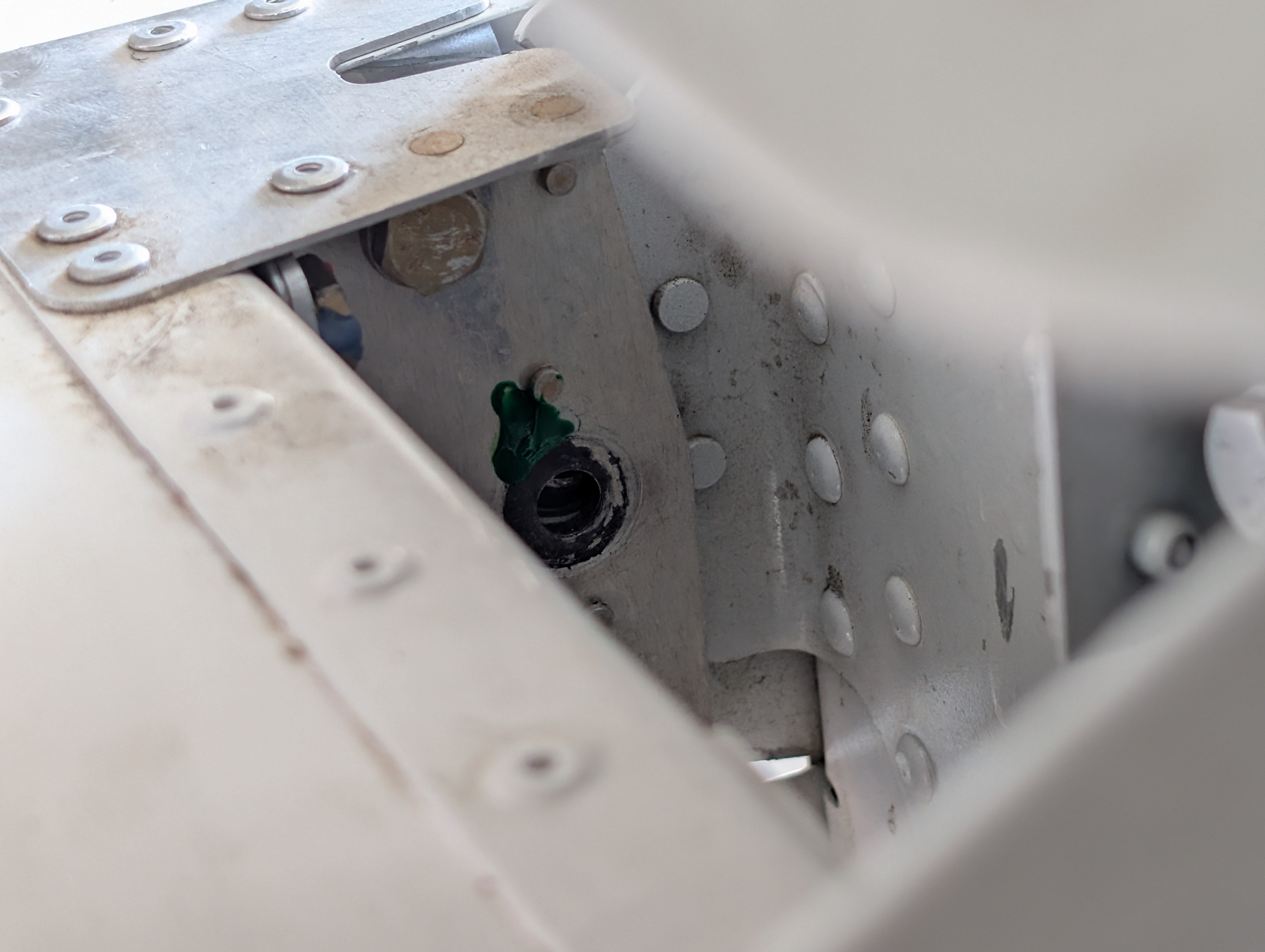
This missing bolt meant the stabilator was not constrained to rotation about the pitch axis but twist about the yaw and roll axes uncontrollably. The aerodynamic instability created by the stabilator moving freely in the air stream could have been disastrous and a failure of the other mounting boss would have likely resulted in the stabilator departing the aircraft. That is, unfortunately, not a recoverable condition and without an airframe parachute, this would have been a disaster.
When I inspected the aircraft, I wrote as I went and this is what I put down.
The right side bolt had 1 washer spacing it from the structure and 1 washer between the structure and the pivot bearing on each side. The left bolt was recovered with 2 washers. Both bolts had torque stripe on them. The stabilator was removed from the aircraft and inspected. Striations were found inside both bolt holes in the stabilator structure. The run in torque on the incident nut plate was low, when compared with the right side structure and an off-the-shelf new nut plate (PN K100-4). A bolt was able to be run all the way in without the use of tools.
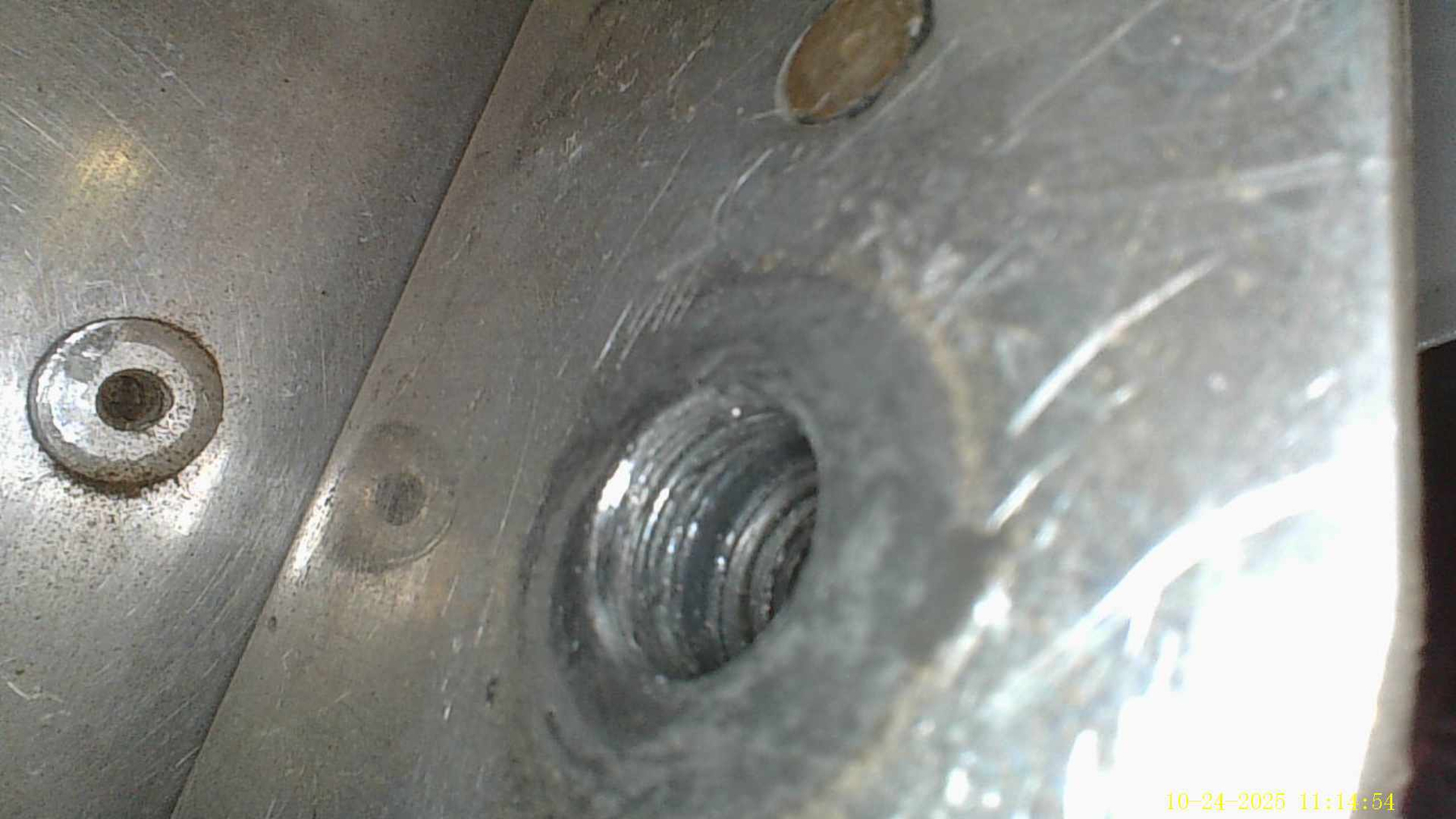
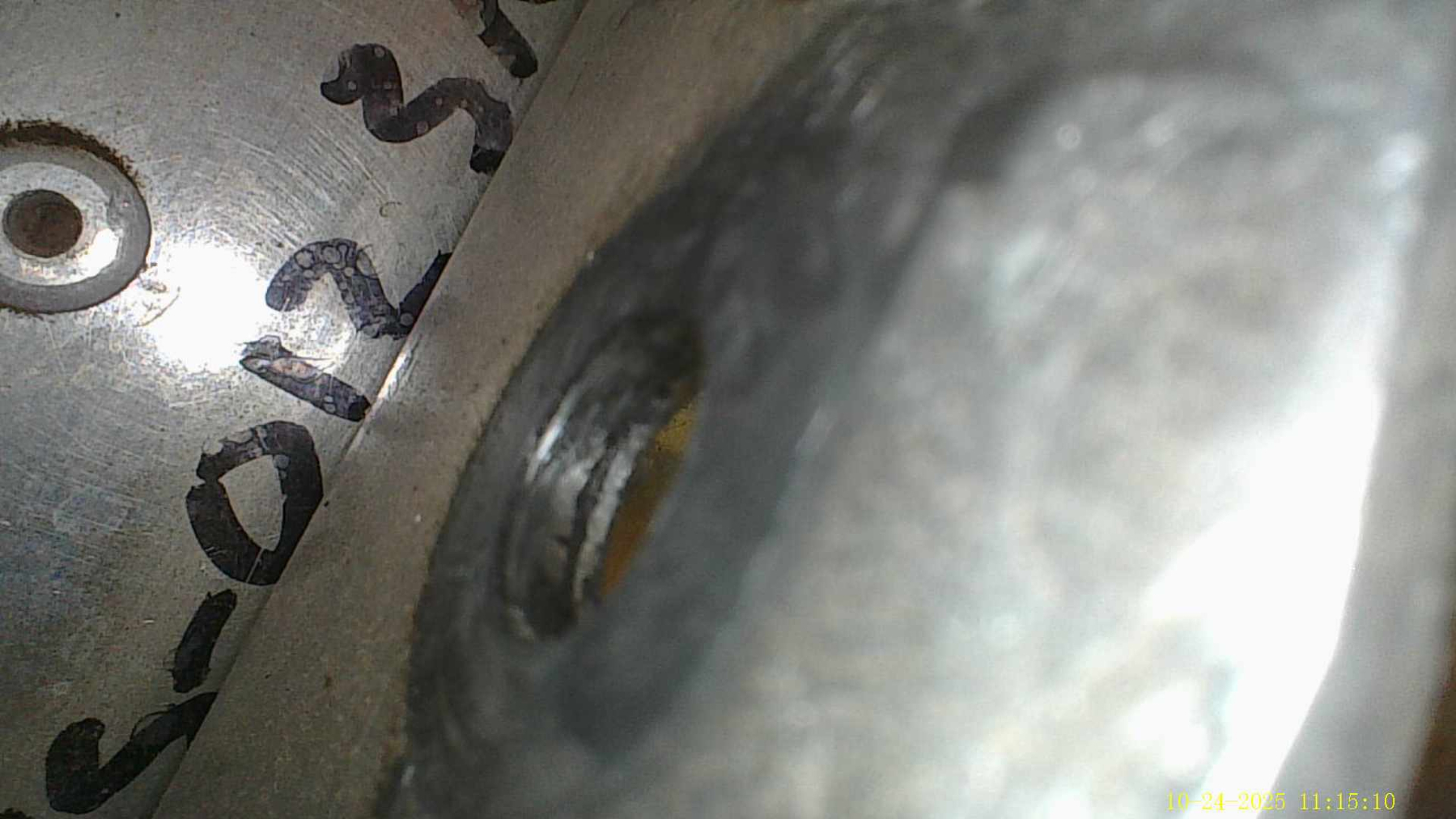
The damage to the mounting structure is pretty significant, what should be a nominal 1/4" hole was nearly 0.3" on the vertical axis. I will be ordering the parts from vans to replace the mounts and replacing the bolts with drilled head bolts which I will safety wire up to brackets on the forward part of the stabilator spar. As part of my investigation, I identified 3 possible contributing factors:
-Possible Contributing Factor 1: The hardware stackup on the left side stabilator bolt appears to have been incorrect. There wear patterns on the outboard left side stabilator mounting structure does not exhibit wear signs consistent with the presence of a washer between the bearing and structure. Additionally, only two washers were recovered from the tail fairing. This likely caused deflection in the mounting structure, adding to the torque load. This permitted the installer to set the proper torque without achieving proper clamping load. During flight, a lack of clamping load could allow the bolt to come loose of the nut plate and back out.
-Possible Contributing Factor 2: The run-in torque for the left side stabilator bolt is significantly lower than the right side or an off-the-shelf K1000-4 nut plate. The self locking feature may not have worked as well as expected.
-Possible Contributing Factor 3: Vans plans page (11-3) do not call out a specific torque for this bolt, and the general nut and bolt torque section (5.20) calls out torque for self locking nuts but not for self locking nut plates. It is possible the installer or mechanic did not read the directions for measuring run-in torque and failed to add that to the final torque.
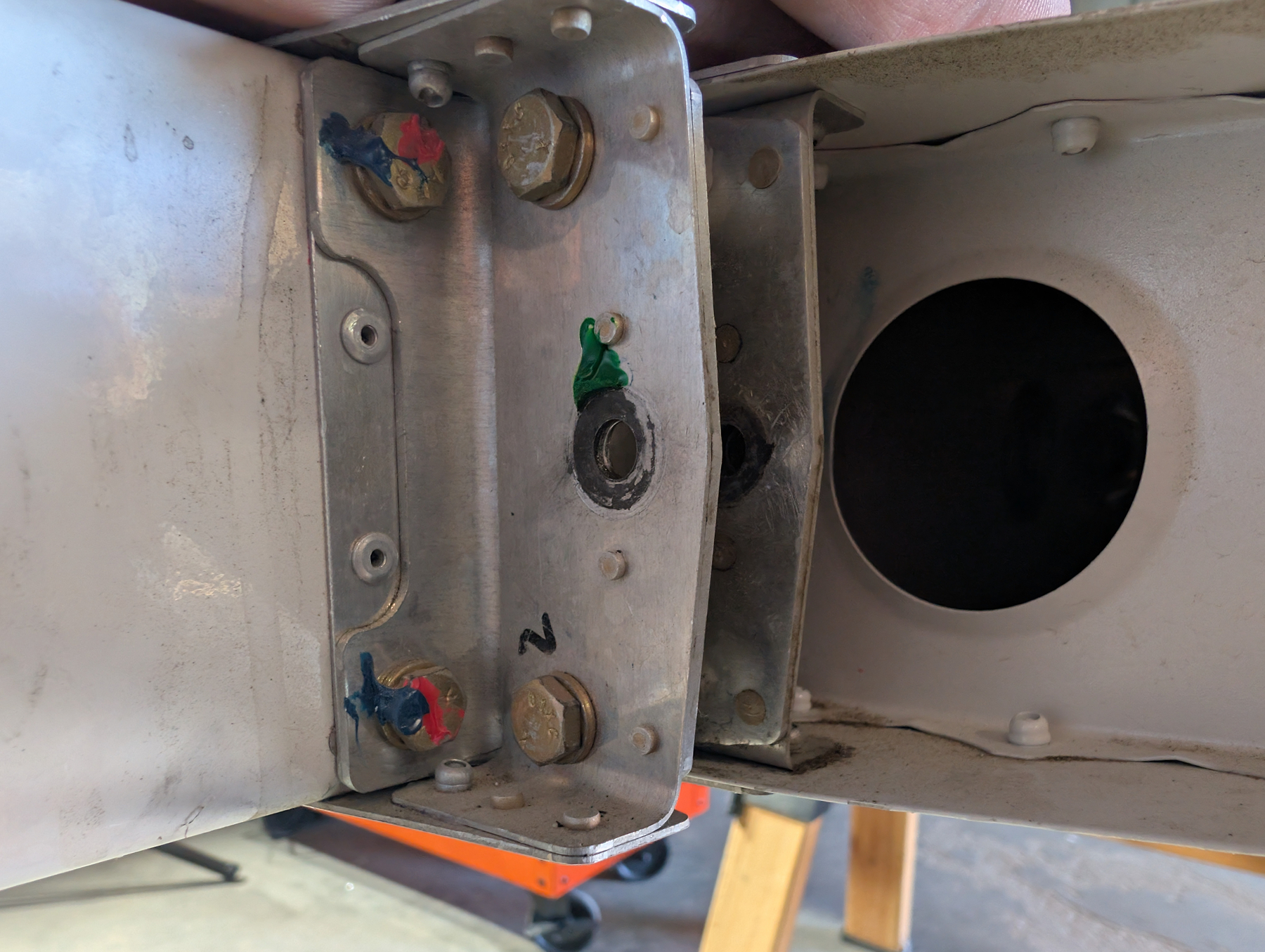
The center bolt that is missing is the bolt in question, the upper left bolt will be where the safety wire tab will be installed.
NOTE: This incident was reported to the NTSB by the pilot when it occurred as requried by 49 C.F.R. 830.5(a)(1). It has additionally been reported to Vans for trend analysis.